Samsung Galaxy A56 Back Cover Guide 2026: Best Types & Tips
I dropped my A56 face-down on my kitchen tile three days after buying it. No case on yet — I was “waiting for the right one to arrive.” Classic mistake. Thankfully it survived with just a tiny scuff on the corner, but that moment made me realize something: a back cover isn’t some optional accessory you get around to eventually. It’s basically an insurance policy you’re supposed to buy before the accident, not after.
Since then I’ve gone through six different covers on this phone — silicone, clear, leather, a rugged one, a magnetic one, and a cheap one that fell apart in a month. So this isn’t theory. This is what actually happened when I used each of them daily.
Why the Back Cover Actually Matters
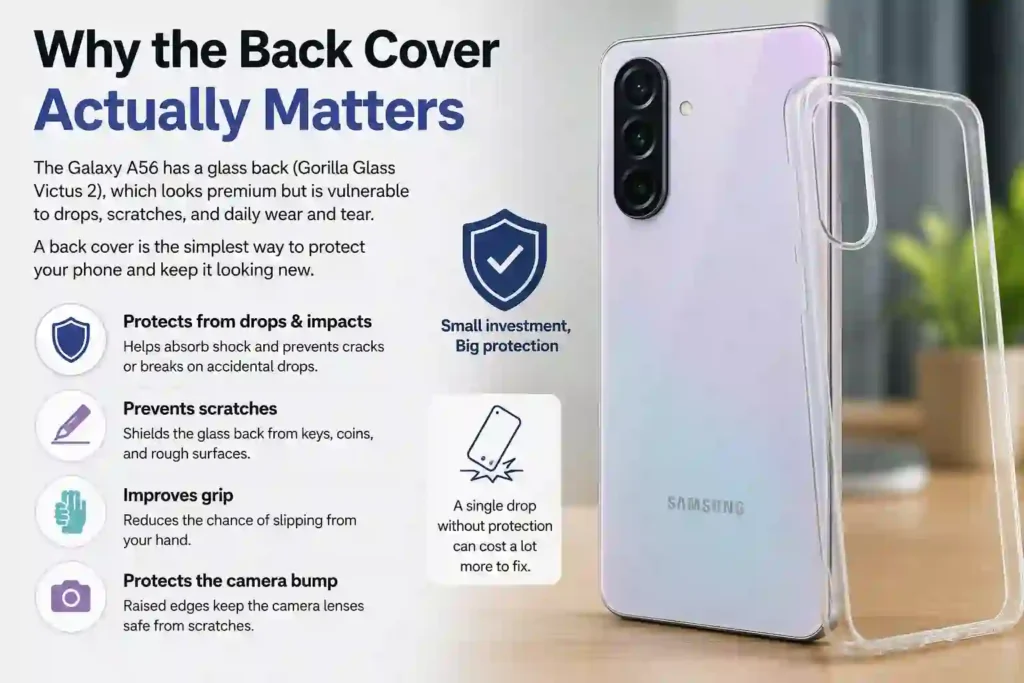
The Galaxy A56 has a glass back (Gorilla Glass Victus 2 on the version I have), and glass looks great in photos but hates concrete floors. A single drop without protection can crack the back panel, and Samsung doesn’t exactly give that part away for free at a repair center.
So the back cover isn’t just about “style.” It’s the cheapest insurance you’ll ever buy for a phone that costs a few hundred dollars.
Quick Specs Table
| Feature | Details |
|---|---|
| Phone Model | Samsung Galaxy A56 5G |
| Back Material | Glass (Victus 2) |
| Common Case Types | Silicone, TPU, Clear, Leather, Rugged, Magnetic (Qi2/MagSafe-style) |
| Average Price Range | $6 – $35 (varies by brand and material) |
| Best For Drops | Rugged / Armor cases |
| Best For Looks | Clear or leather-back cases |
| Wireless Charging Compatibility | Most cases under 2mm thickness |
| Where to Buy | Amazon, Samsung.com, local mobile shops, AliExpress (for budget options) |
Benefits of Using a Back Cover
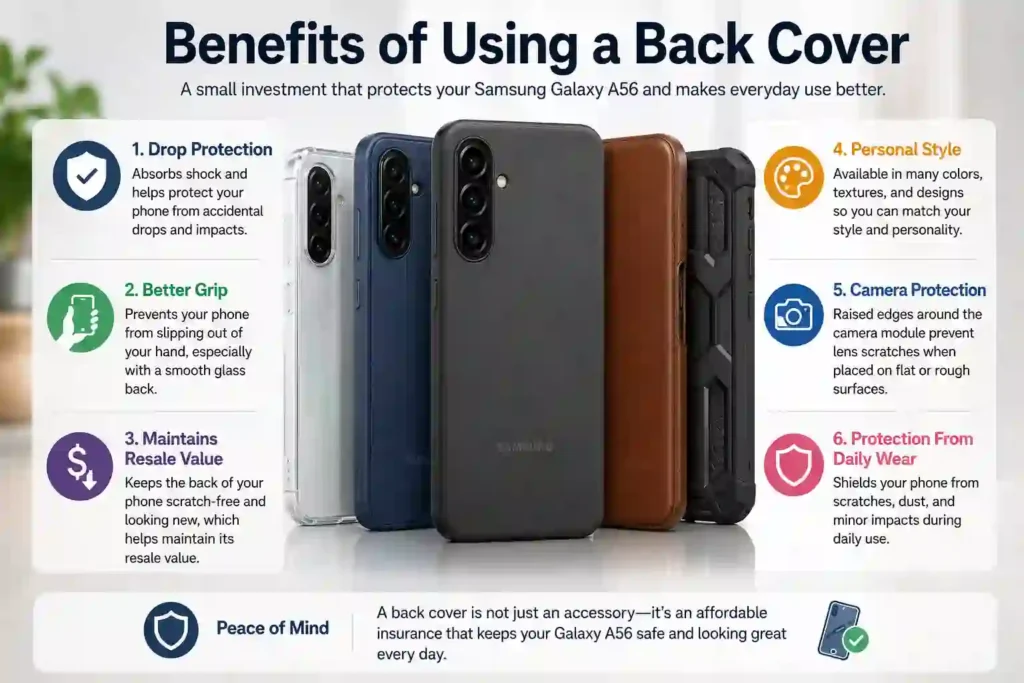
1. Drop protection (the obvious one) My rugged case took a fall down a flight of concrete stairs. The phone was fine. The case had a visible dent. That’s exactly what it’s supposed to do — sacrifice itself.
2. Grip improvement The A56’s glass back is slippery, especially with sweaty hands in summer. A textured silicone case fixed that instantly for me.
3. Resale value If you plan to sell the phone later (which most of us do after 2-3 years), a scratch-free back matters a lot. Buyers on OLX or Facebook Marketplace notice scuffs immediately and lowball you for it.
4. Personal style Cases from brands like Spigen, Ringke, and Nillkin come in colors and textures that basically let you “reskin” your phone without touching the actual hardware.
5. Camera bump protection The A56’s camera module sticks out a bit. A cover with a raised edge around the camera stopped mine from getting scratched when I set the phone down on rough surfaces — like café tables, which are somehow always slightly gritty.
Drawbacks You Should Know About
Nothing is perfect, so let’s be honest here.
- Added bulk. Rugged cases especially make the phone noticeably thicker. If you like a slim in-hand feel, this will bother you.
- Heat buildup during charging. I noticed my phone ran a touch warmer with a thick case on during fast wireless charging. Not dangerous, just noticeable.
- Lint and dust trapping. Silicone cases, especially light-colored ones, collect pocket lint like a magnet. Mine turned grayish around the edges within two months.
- Some cases block buttons or ports awkwardly. I bought one off a random online store where the volume buttons were stiff and mushy because the cutouts were slightly misaligned.
- Not all cases fit properly. The A56 shares some similarities in shape to other A-series phones, but ports and camera cutouts differ. A case made for the “A55” almost fit mine — almost is not good enough when it comes to camera cutouts.
Best Types of Back Covers for the A56
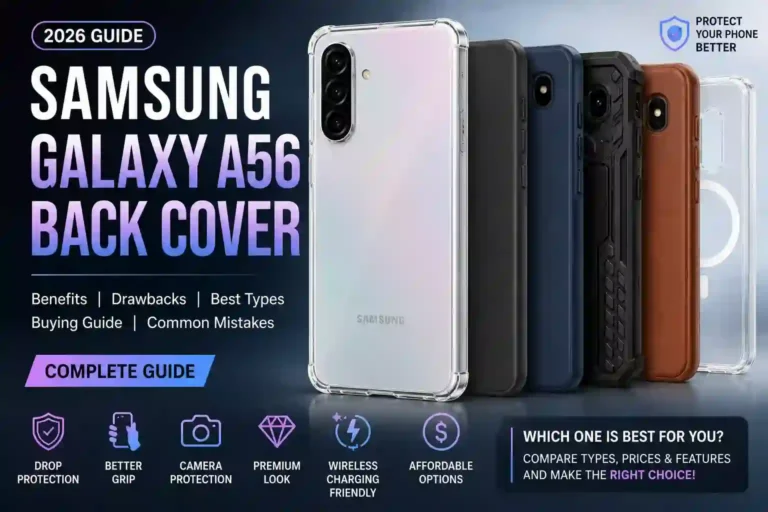
1. Silicone / TPU Cases
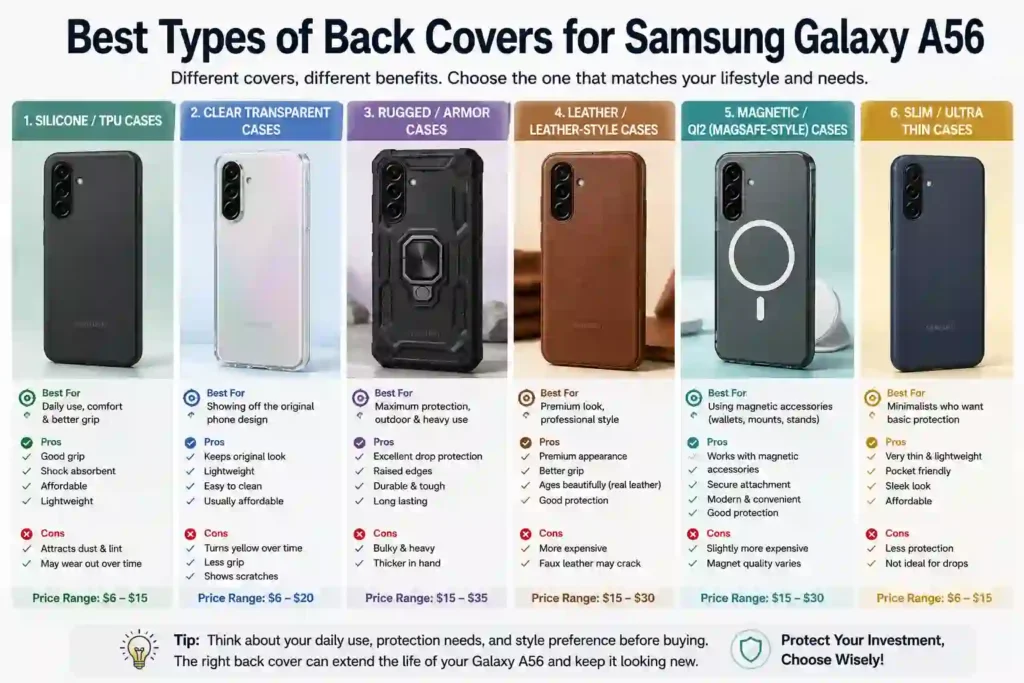
Soft, grippy, affordable. Good daily driver. Brands like Spigen Liquid Air or Samsung’s own official silicone cover work well. Downside: attracts dust over time.
2. Clear Cases
If you actually like how the phone looks (the A56 does have a nice color options like Awesome Graphite and Pink), a clear case lets that show. Just know clear cases yellow over time, especially with sun exposure. Mine turned slightly yellow after about 5 months of daily use.
3. Rugged / Armor Cases
Think Otterbox-style protection. Bulky, but if you work outdoors, hike, or you’re just clumsy like me, this is worth it. My rugged case survived being run over lightly by a bicycle tire. True story.
4. Leather / Leather-Style Cases
More premium look and feel, better grip than glossy plastic, ages nicely (real leather develops a patina, faux leather can crack after a year or so).
5. Magnetic / Qi2-style Cases
Newer trend, lets you snap on wallets, car mounts, or stands. Handy if you use your phone for navigation while driving. Just confirm the specific case is actually built for the A56’s magnet ring placement, not a generic universal one — those often don’t align properly.
Step-by-Step: How to Pick the Right One
- Decide your priority first — protection, looks, or grip. You genuinely can’t max out all three with one case.
- Check compatibility by model number, not just “A56.” Search the exact term “Galaxy A56 5G case” rather than just “A56 case.”
- Look at reviews with photos, not just star ratings. Fit issues show up clearly in real customer photos.
- Check wireless charging claims if you use a Qi charger — some thick cases block it entirely.
- Buy from a seller with return options. Amazon and Samsung’s own store make this painless if the fit is off.
- Test the fit within the return window — press all buttons, plug in a charging cable, and check if the camera bump is fully covered.
Real Examples From My Own Use
- Café work sessions: I use a clear case with reinforced corners most days. Looks clean, survives the occasional table-edge bump.
- Travel/hiking: Swapped to a rugged case with a kickstand. Doubled as a stand for watching videos in the tent, which I didn’t expect to actually use but ended up loving.
- Formal events: Leather-style case, because a chunky rugged case just looks off with a nice shirt. Small thing, but it matters when you’re conscious of appearance.
Common Mistakes to Avoid
- Waiting to buy a case “later.” Just don’t. Order it same day as the phone, even a cheap $8 one as a placeholder.
- Buying based on price alone. The cheapest case I bought (around $4) cracked at the corner within three weeks.
- Ignoring the camera cutout alignment. A slightly misaligned cutout can scratch the camera glass over time from micro-friction — I learned this the hard way with one budget case.
- Not cleaning the case. Dust and grit trapped between the case and phone back can actually scratch the glass from the inside. Wipe it down monthly with a microfiber cloth.
- Choosing based on how it looks in photos, not real texture. Some “premium leather” cases in photos are just thin plastic wraps in real life.
Pros & Cons Summary
Pros
- Protects glass back from scratches and cracks
- Improves grip significantly
- Wide variety of styles and price points
- Helps maintain resale value
- Some add functional features (stands, wallets, magnets)
Cons
- Adds bulk and weight
- Can trap dust/lint
- Cheap cases wear out fast
- Fit issues if not bought for the exact model
- Slight heat retention during fast charging
FAQs
1. Does the Galaxy A56 really need a back cover if it has Gorilla Glass Victus 2? Yes. Victus 2 resists scratches and some drops well, but it’s not shatterproof. A direct drop on a hard corner can still crack it.
2. Will a case affect wireless charging? Only if it’s overly thick (generally above 2-3mm) or has metal components. Most silicone and TPU cases charge fine.
3. Are clear cases worth it if they yellow over time? They’re worth it for the first several months of that “brand new phone” look. Just expect to replace it after 6-8 months if yellowing bothers you, or look for ones marketed as “anti-yellowing” — though results vary by brand.
4. What’s the best case for someone who drops their phone a lot? A rugged/armor style case is the safest bet. Brands like Otterbox, Spigen Tough Armor, or Ringke Fusion-X are commonly recommended for heavy protection.
5. Can I use a case made for Galaxy A55 on the A56? Not recommended. Even if the outer dimensions are close, camera cutouts and button placements often differ slightly, leading to a poor fit.
6. How often should I replace my phone case? Silicone/TPU cases usually last 6-12 months with daily use before they stretch out or discolor. Rugged cases last longer, often 1-2 years.
7. Do leather cases need any special care? Genuine leather benefits from occasional leather conditioner and keeping it away from prolonged direct sunlight or moisture. Faux leather just needs a wipe-down.
8. Is it better to buy a case from Samsung directly or a third-party brand? Samsung’s official cases guarantee perfect fit, but third-party brands like Spigen or Ringke often offer better protection or features at similar or lower prices. Both are valid options depending on your priority.
Final Thoughts
At the end of the day, picking a back cover for the A56 isn’t really about finding the “best” one that everyone recommends — it’s about matching it to how you actually use your phone. If you’re gentle with your devices and care about looks, a slim clear or leather case will do fine. If you’re the type who’s dropped three phones this year (no judgment), get the rugged one and don’t look back.
I still keep that slightly scuffed rugged case in a drawer as a backup, just in case my current one wears out mid-trip. Cheap insurance, easy peace of mind — worth every dollar.